Ingredients
Method
- Preheat oven to 325°F (163°C). In a medium bowl mix chocolate cookie crumbs and melted butter until the mixture resembles wet sand. Press firmly into the bottom of a 9 inch springform pan using the back of a measuring cup. Bake for 10 minutes then remove and allow to cool while you prepare the filling.
- Beat softened cream cheese in a large mixing bowl on medium speed for 2 to 3 minutes until completely smooth. Add granulated sugar and beat until creamy and well combined.
- Mix in peanut butter, vanilla extract, and almond extract and beat until smooth. Add eggs one at a time mixing on low speed after each addition. Do not overmix to prevent cracking.
- Fold in sour cream until just combined then gently fold in crushed Butterfinger pieces. The batter should be thick, smooth, and creamy.
- Pour the filling over the cooled crust. Wrap the outside of the springform pan tightly with aluminum foil. Place the pan inside a large roasting pan and add hot water to the roasting pan until it reaches halfway up the sides of the cheesecake pan.
- Bake for 60 to 70 minutes until the edges are set and the center still has a slight jiggle. Turn off the oven and leave the door slightly ajar. Allow the cheesecake to sit in the oven for 1 hour.
- Remove from the oven and allow to cool completely at room temperature. Refrigerate for at least 6 hours or overnight for best results.
- Place chocolate chips in a heatproof bowl. Heat heavy cream until just simmering then pour over the chocolate chips. Let sit for 2 to 3 minutes then stir until smooth and glossy.
- Pour the ganache over the chilled cheesecake and spread evenly. Refrigerate for an additional 30 minutes until the ganache is set.
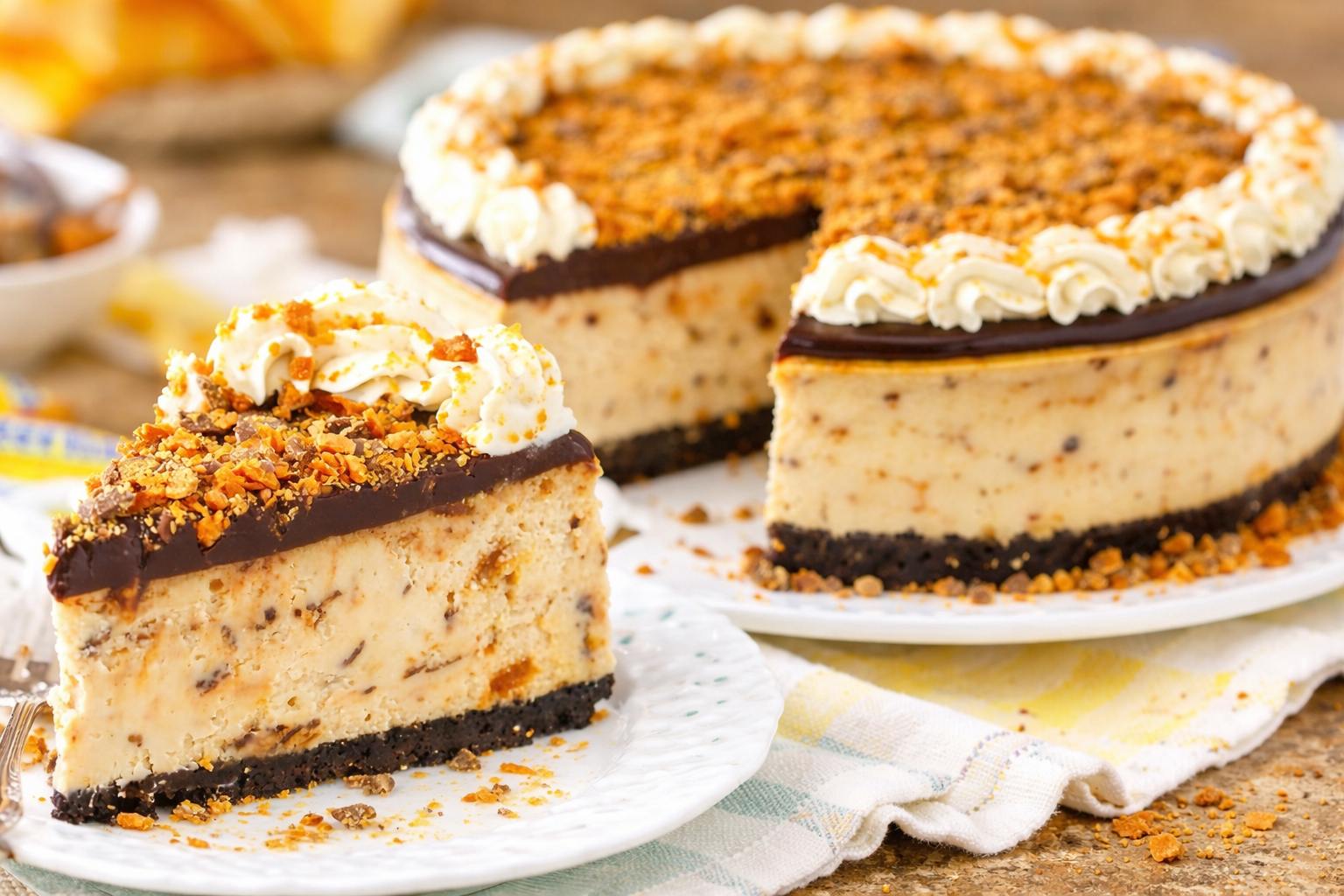
- Garnish with extra crushed Butterfinger crumbs, whipped cream swirls, and a chocolate drizzle if desired. Slice and serve chilled.
Notes
Make sure cream cheese, eggs, and sour cream are all fully at room temperature before mixing for the smoothest filling.
Do not overmix after adding the eggs — overmixing incorporates too much air and causes cracking.
Never skip the water bath — it creates a gentle, even heat that prevents cracking and gives the cheesecake its ultra creamy texture.
The gradual cooling process in the oven and then at room temperature is essential — rushing this step causes the cheesecake to crack.
Cheesecake is best made the day before serving as the flavor and texture improve significantly overnight.
Use a sharp knife wiped clean between each slice for the cleanest cuts.
Do not overmix after adding the eggs — overmixing incorporates too much air and causes cracking.
Never skip the water bath — it creates a gentle, even heat that prevents cracking and gives the cheesecake its ultra creamy texture.
The gradual cooling process in the oven and then at room temperature is essential — rushing this step causes the cheesecake to crack.
Cheesecake is best made the day before serving as the flavor and texture improve significantly overnight.
Use a sharp knife wiped clean between each slice for the cleanest cuts.